
Make your own kaleidoscope
You have already seen how two mirrors can turn one small drawing into a whole star of reflections. A kaleidoscope uses the same idea — but puts the mirrors inside a tube.
Can you build a kaleidoscope from a cardboard paper-towel roll?
How does a kaleidoscope work?
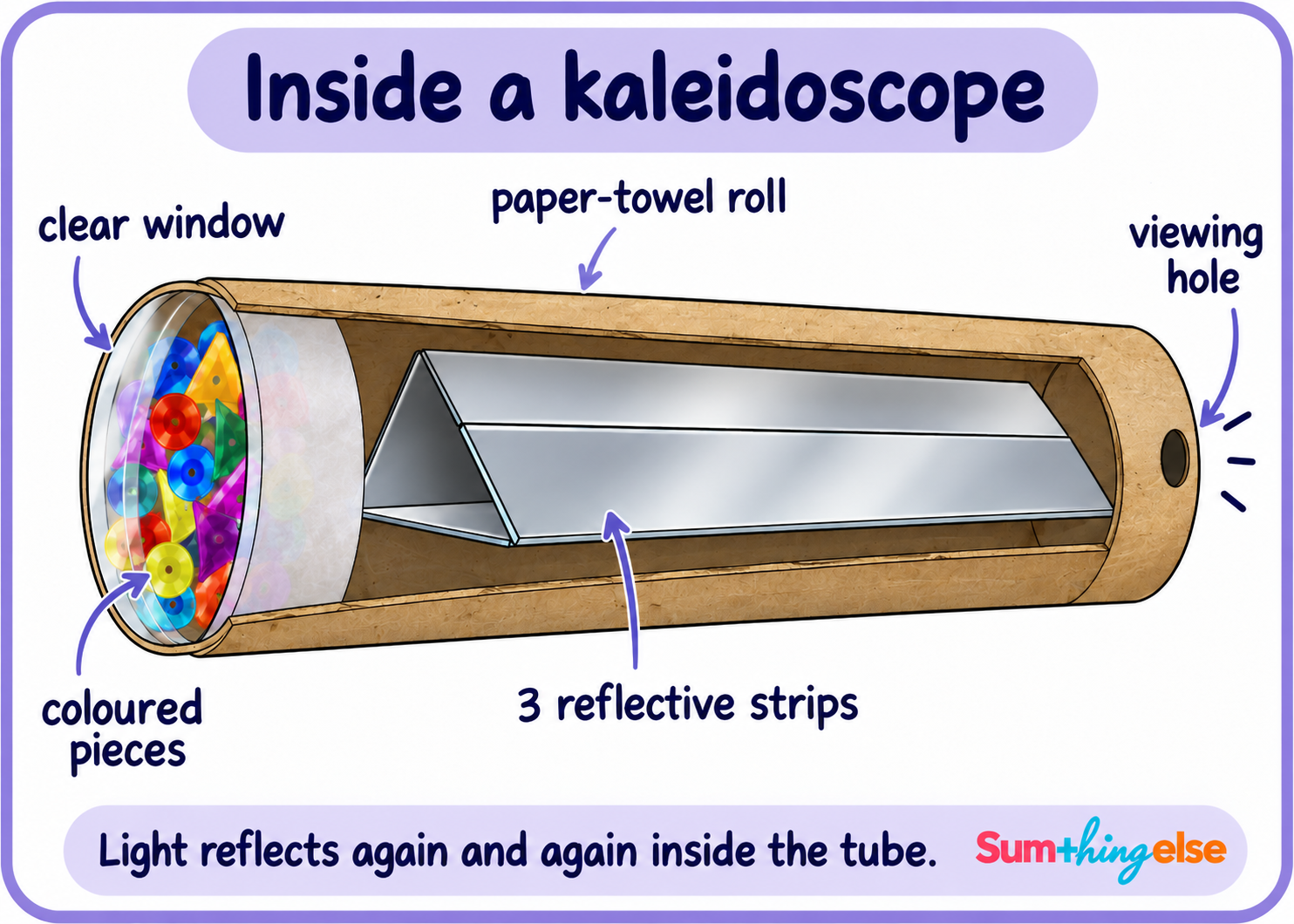
Inside a kaleidoscope are several shiny surfaces arranged so that they face one another. Light bounces from one surface to another, making reflections of reflections.
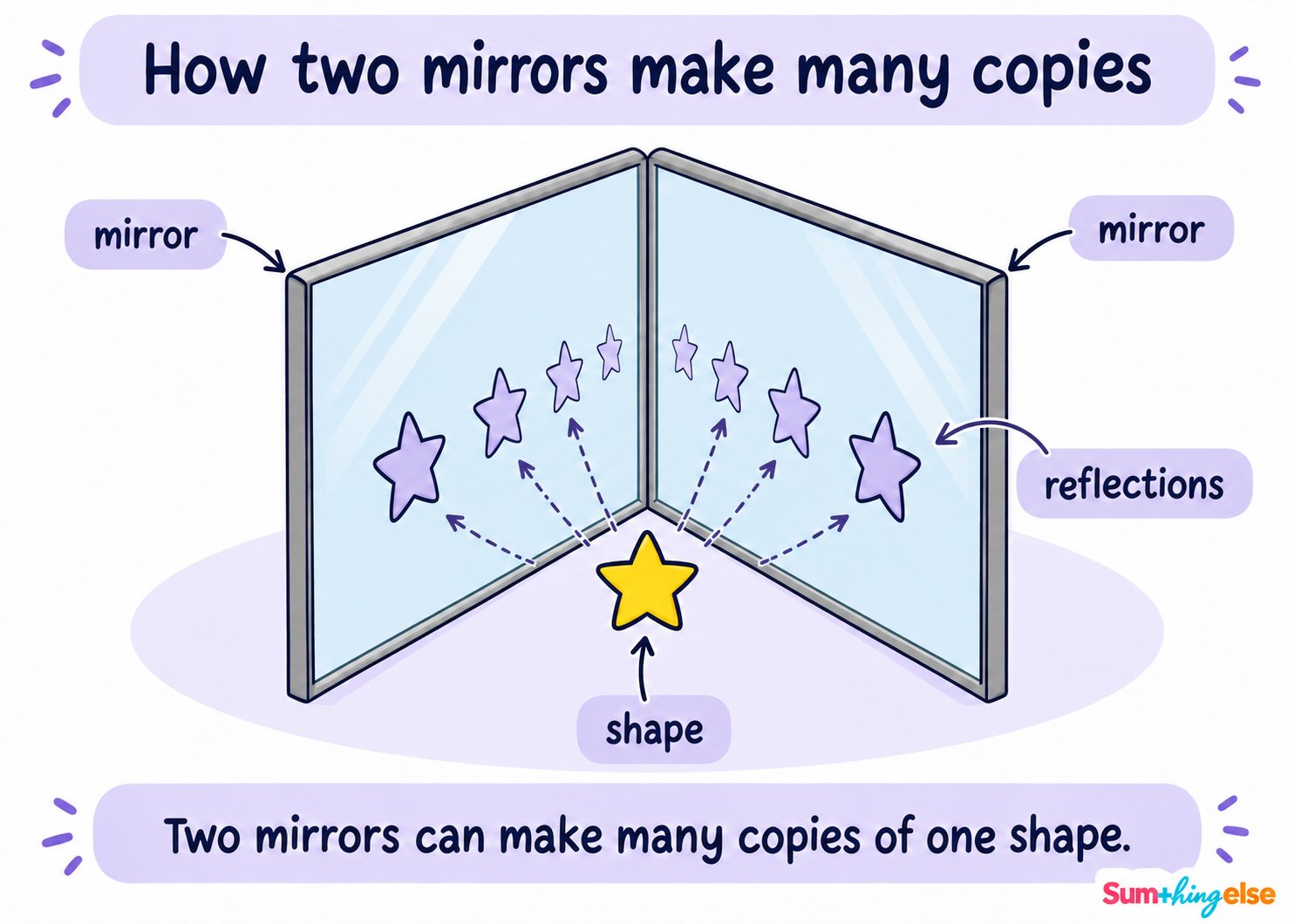
A tiny coloured shape can therefore appear many times. Together, all those reflected copies make a symmetrical pattern.
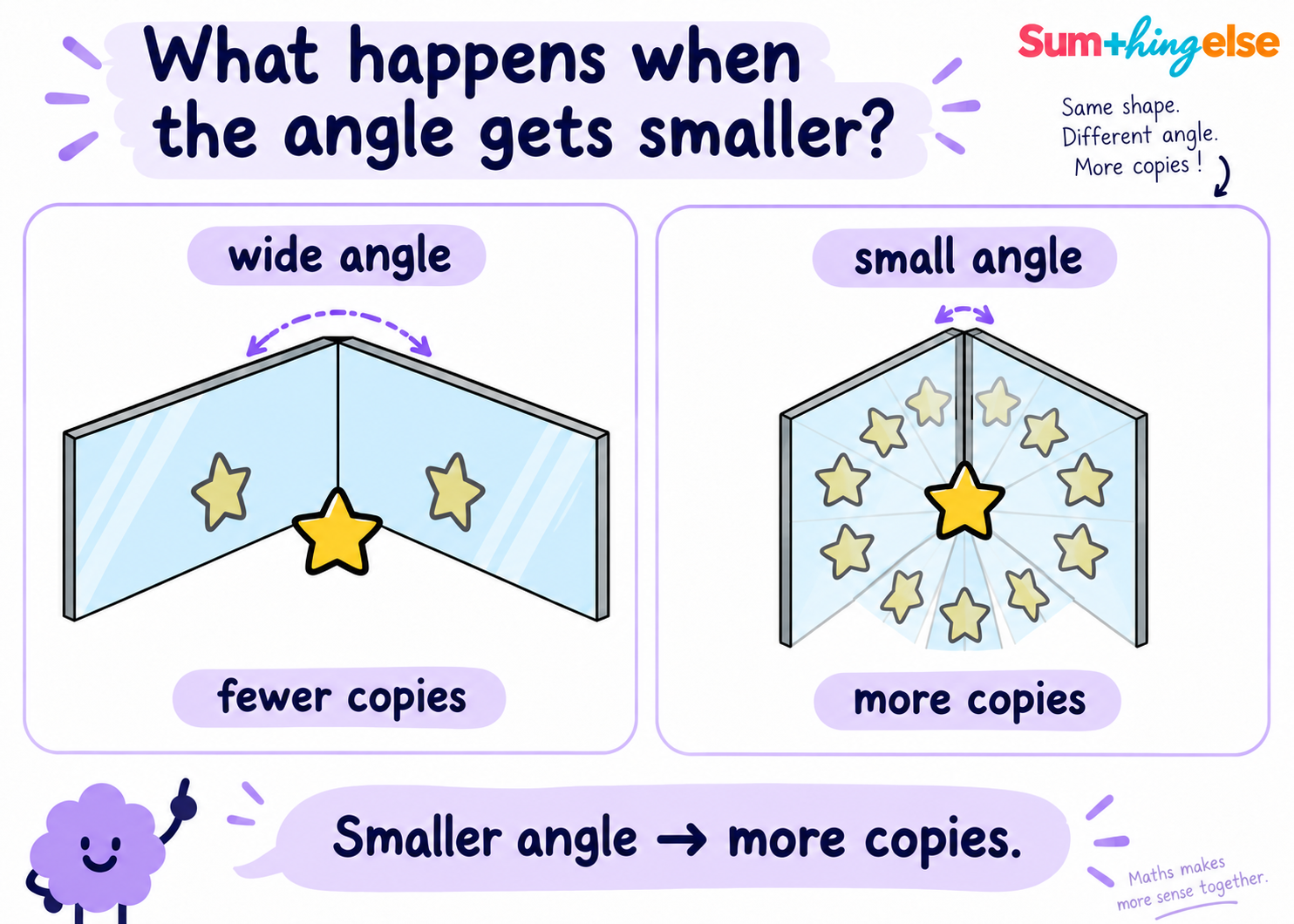
When you turn the kaleidoscope, the coloured pieces at the end move. The mirrors stay in the same arrangement, but the picture being reflected changes — so a completely new pattern appears.
The mirrors repeatedly reflect the same shapes. Because the reflections are arranged around the centre, the finished picture often has both reflection symmetry and rotational symmetry.
Build one from a paper-towel roll
You will need:
- an empty cardboard paper-towel roll
- three strips of reflective card or plastic mirror sheet
- tape
- card
- clear plastic or acetate
- tracing paper or baking paper
- a few small colourful sequins, beads or pieces of transparent plastic
- scissors
Use plastic mirror sheet or reflective card rather than glass. Younger children may need adult help with cutting.
What to do
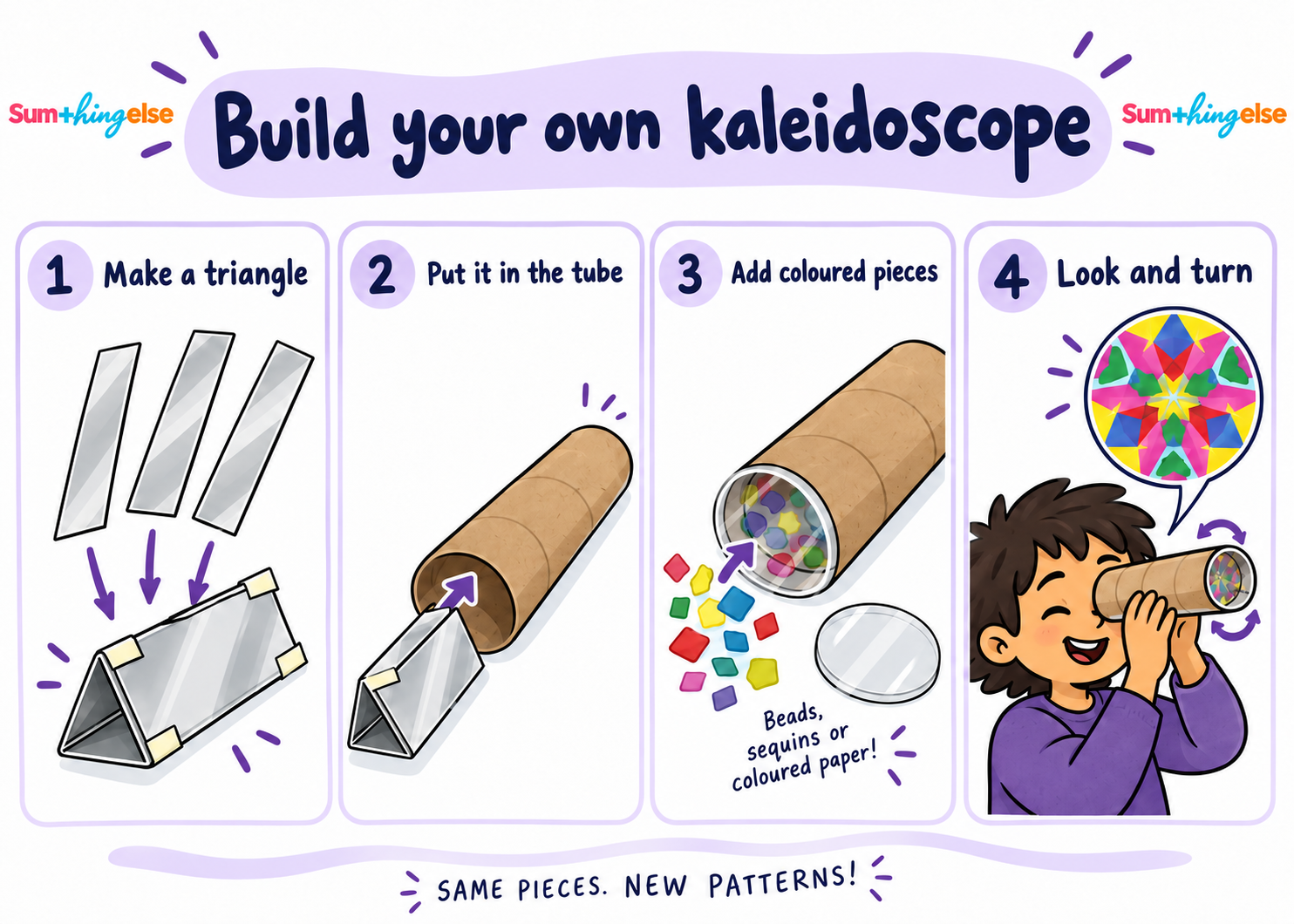
- Cut three long strips of reflective card, slightly shorter than your tube.
- Tape the strips together along their long edges so that they fold into a long triangular tunnel, with the shiny sides facing inwards.
- Slide the triangular mirror tunnel inside the cardboard roll.
- At one end, add a clear plastic circle. Place a few colourful pieces on it.
- Cover the coloured pieces with tracing paper or another translucent layer, leaving just enough room for the pieces to move when the tube turns.
- At the other end, add a card circle with a small viewing hole in the centre.
- Point the coloured end towards a bright window or lamp, look through the hole, and slowly turn the tube.
Watch one coloured piece carefully. How many copies of it can you see? Can you spot any mirror lines? How far do you have to turn the kaleidoscope before the pattern looks similar again?
Try changing the coloured pieces inside your kaleidoscope. Does changing their shape, colour or position change the kind of symmetry you see?
Then compare your kaleidoscope with the two-mirror experiment above. What is the same? What is different?