
Make a star with two mirrors
So far we have mostly used one mirror. But something surprising happens when two mirrors meet at an angle.
Each mirror reflects the object — and it can also reflect the image made by the other mirror. One drawing can suddenly appear again and again.
Two mirrors, many copies
Stand two small mirrors on their edges so that they meet like an open book. Put a coloured shape or drawing close to the corner where they meet.
Look into the mirrors. Then slowly change the angle between them.
What happens to the number of reflections as you bring the mirrors closer together?
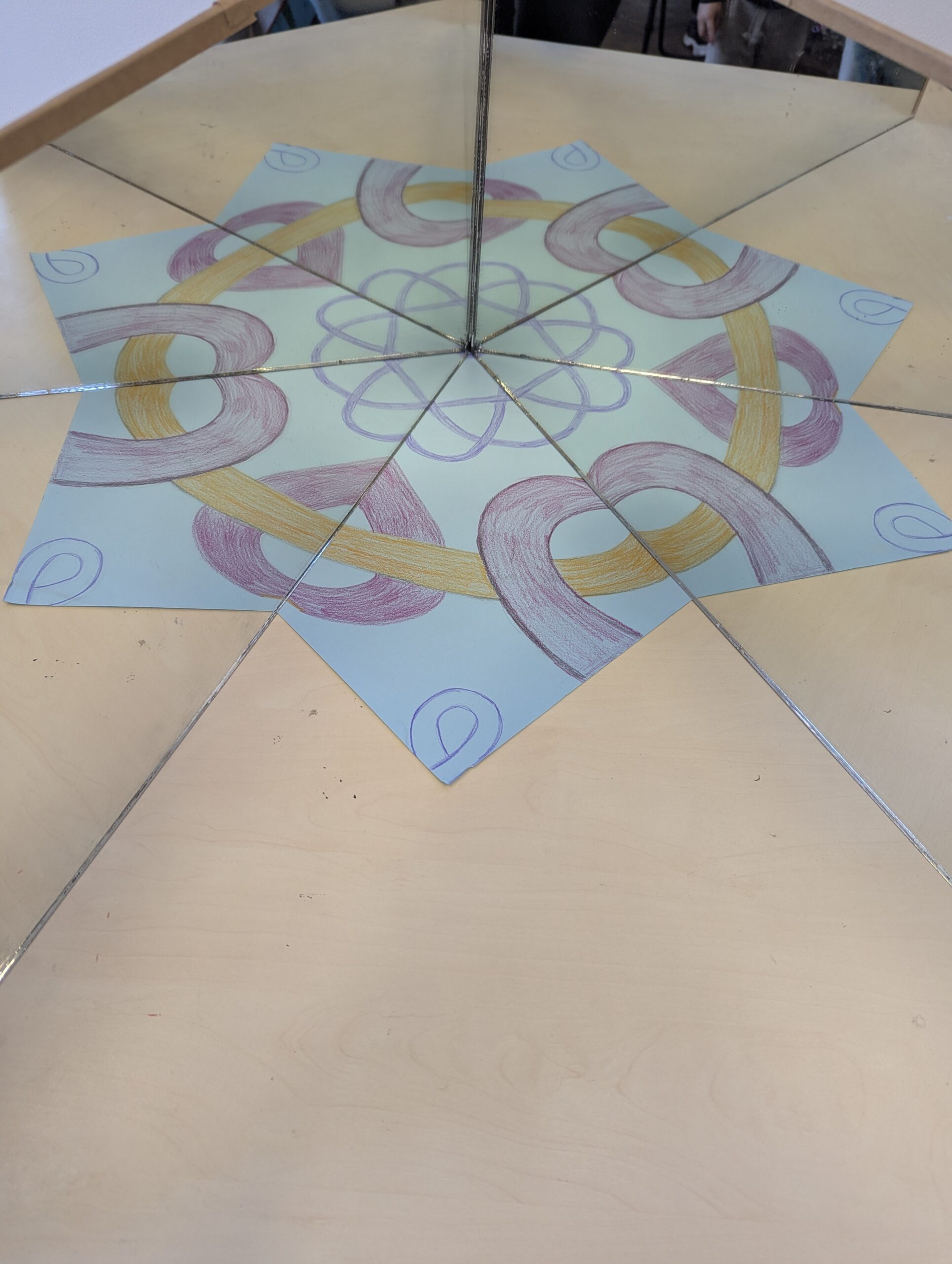
Start with the mirrors fairly wide apart. Already, one part of the drawing appears several times.
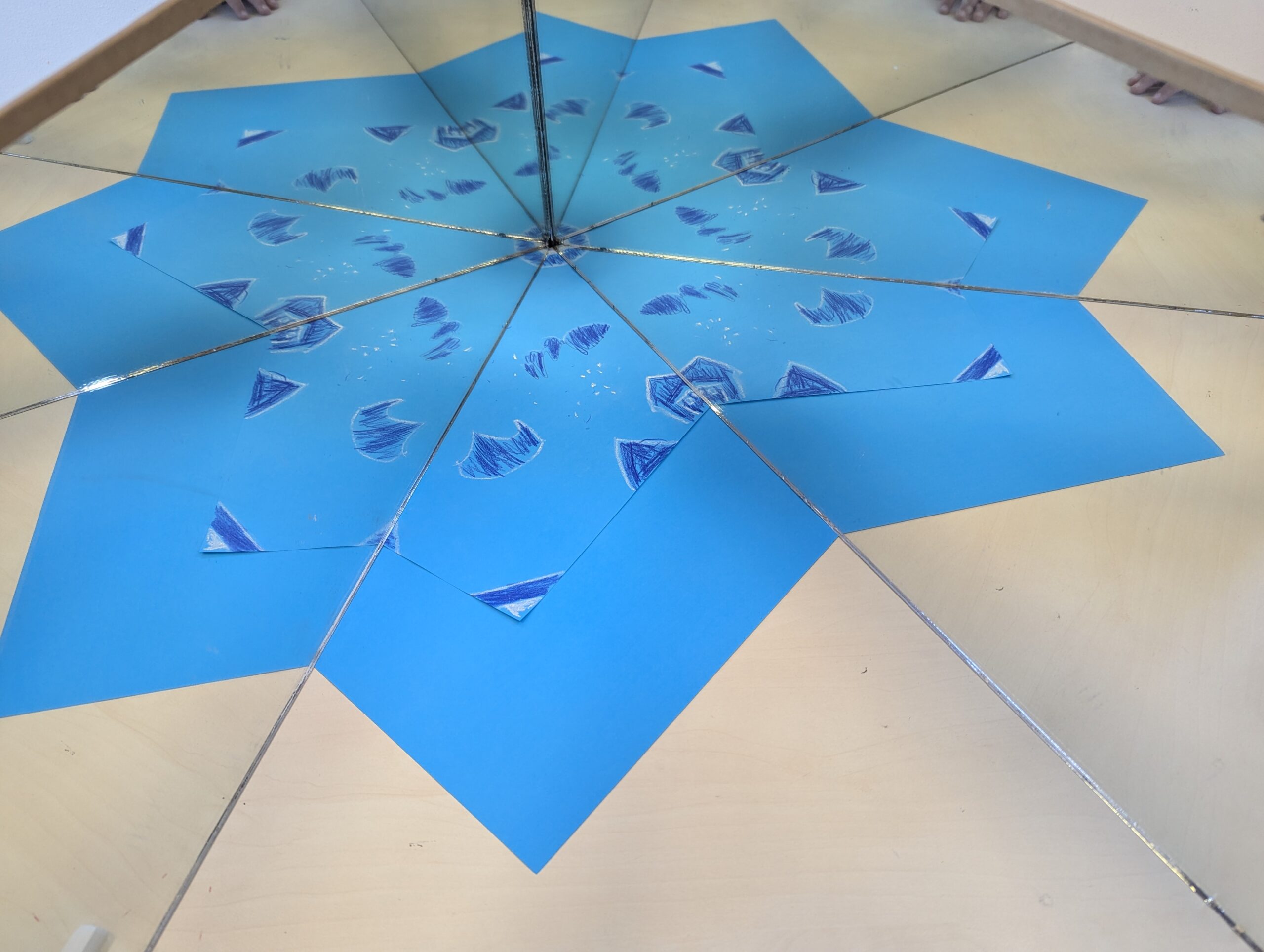
The repeated pieces begin to make a star-like pattern around the point where the mirrors meet.
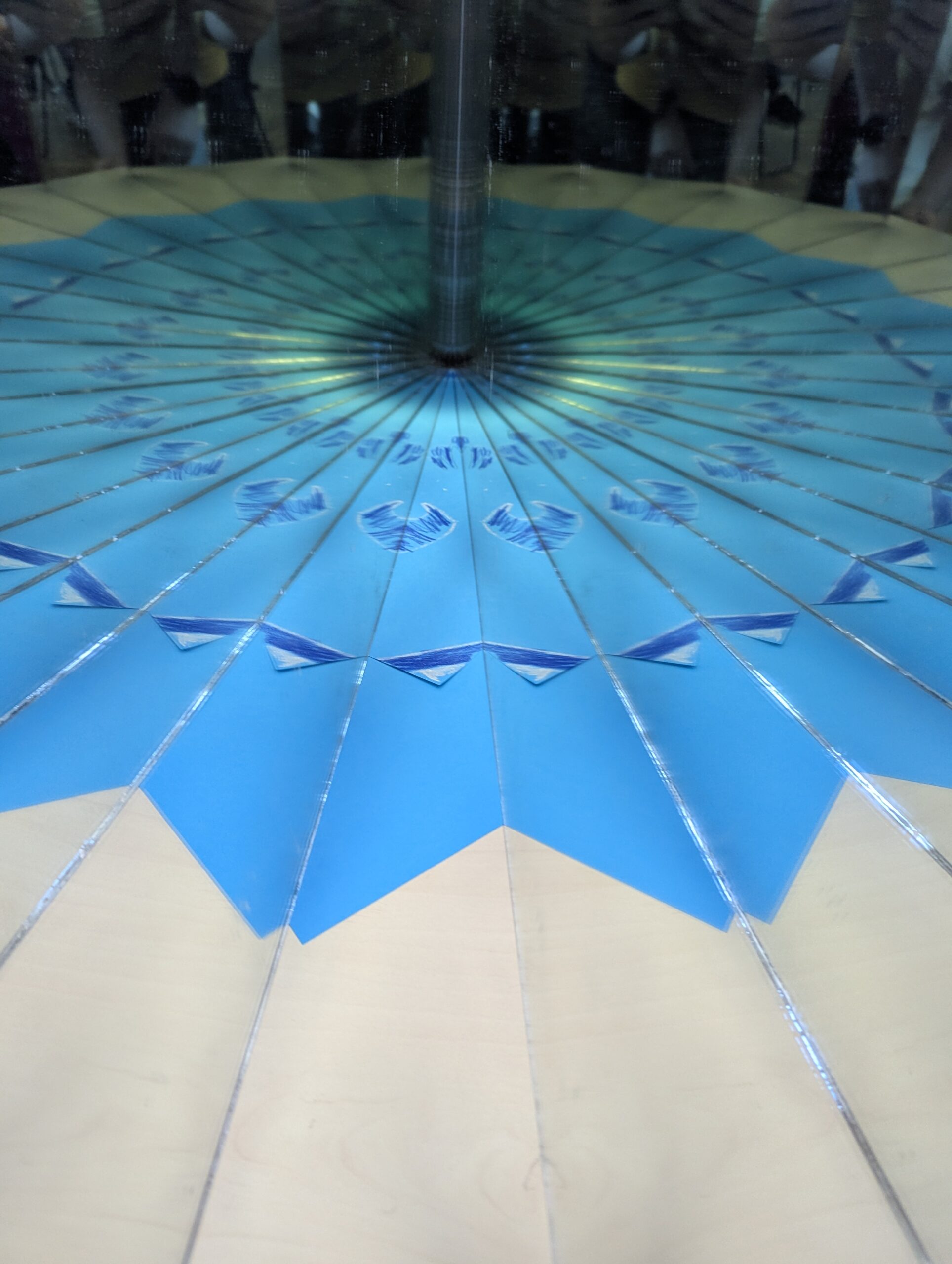
Bring the mirrors closer together and even more copies appear. The pattern is divided into many narrow sections around the centre.
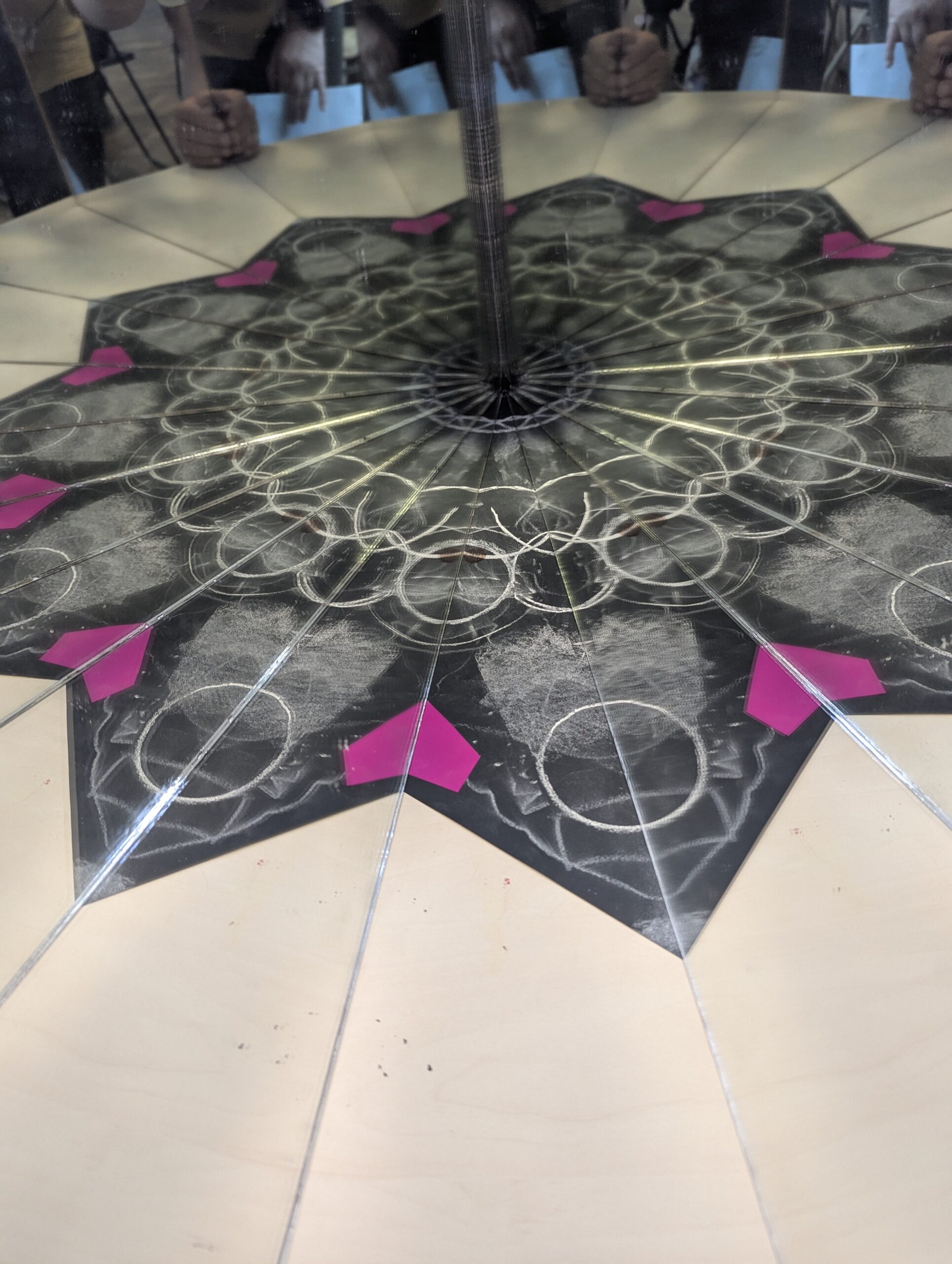
A small piece of drawing can turn into a whole kaleidoscope-like design.
Can you predict the pattern?
A complete turn around the centre is 360°. If the mirrors divide that turn into equal angles, we can predict how many sections appear.
4 sections
6 sections
8 sections
12 sections
The smaller the angle between the mirrors, the more times the pattern can repeat around the centre.
The mirrors create repeated reflections, but the complete star-like pattern can also have rotational symmetry. Turn it around its centre and it can match itself again.
Suppose the angle between the mirrors is 40°.
How many equal 40° sections fit into one complete 360° turn?