
Multiplication is compressed counting
Before trying to remember multiplication facts, make sure the answers are not just arbitrary numbers attached to questions. Multiplication is a shortcut for counting equal groups.
Try it interactively
Choose the number of groups and the size of each group. Then notice that the same total can be described by a picture, repeated addition, skip-counting in either direction, and a multiplication sentence.
Open the multiplication interactive →See the counting happen
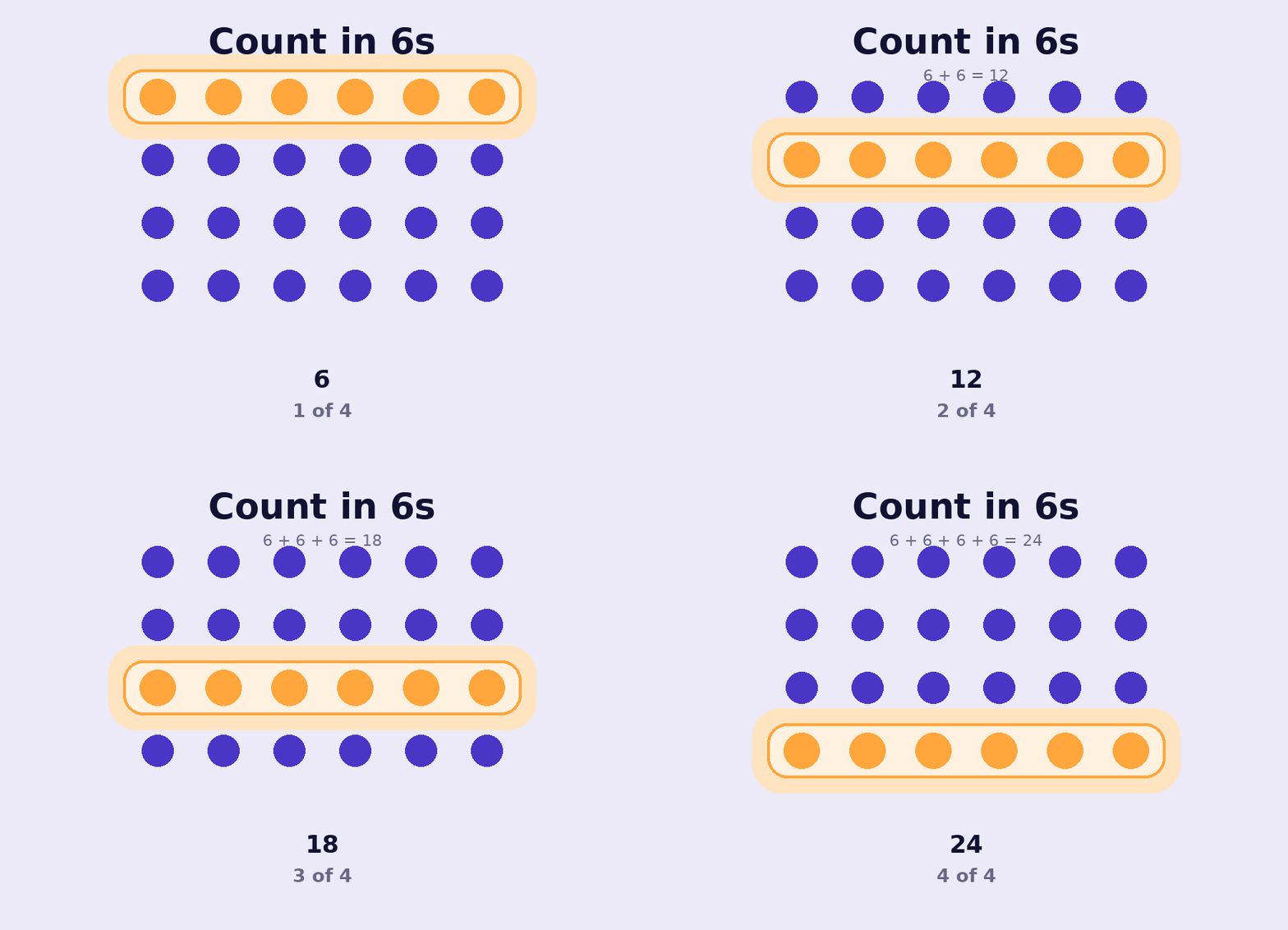
In this example, we have 4 groups of 6. Watch one row of 6 being highlighted at a time. This helps show why we can count in 6s: 6, 12, 18, 24.
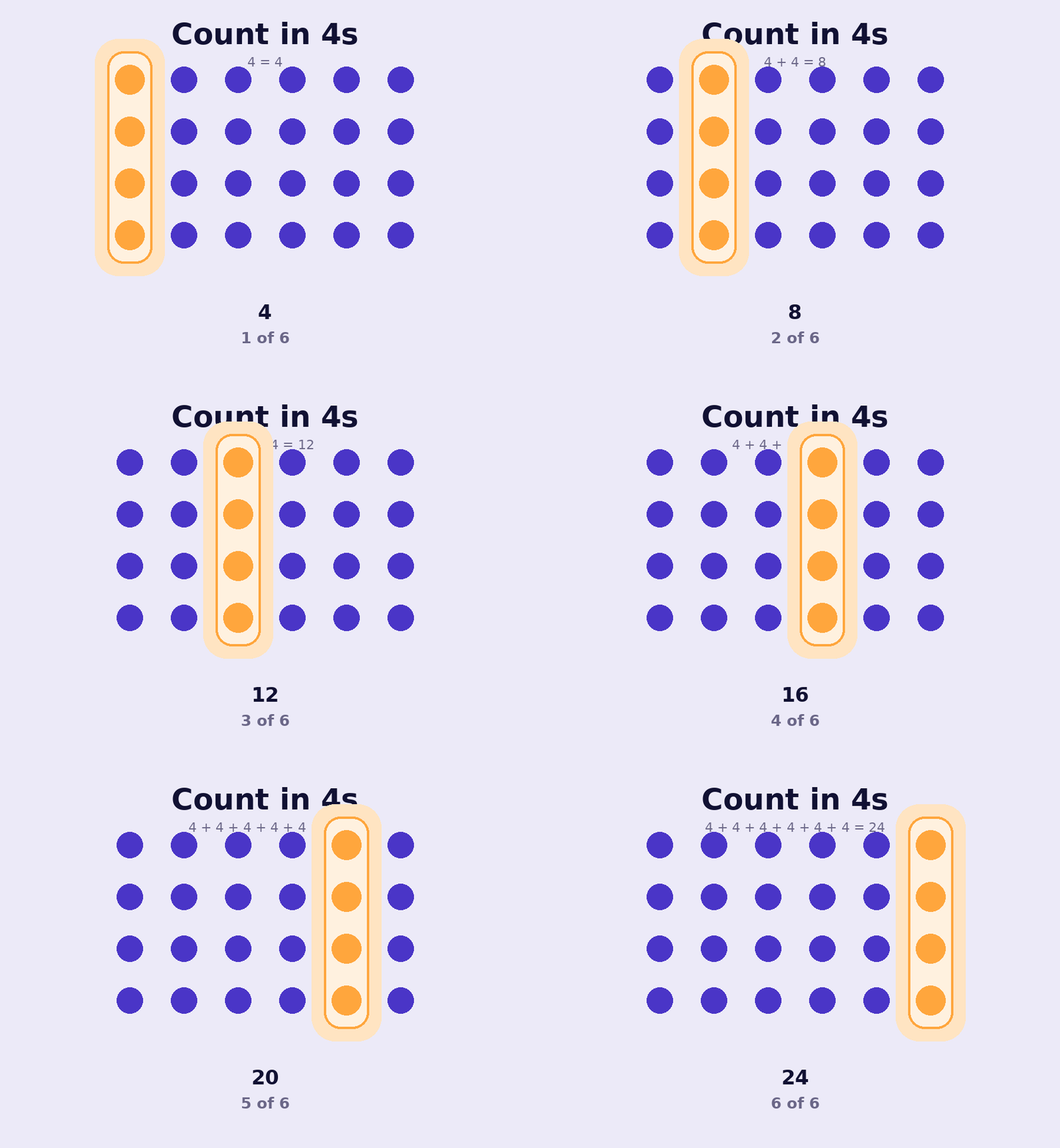
At the same time, we have 6 groups of 4. Watch one column of 4 being highlighted at a time. This helps show why we can count in 4s: 4, 8, 12, 16, 20, 24.
What changed — and what stayed the same?
The dots have been rearranged, but none have been added or removed. So the total stays the same: 24.
You can see the same array in two ways:
- 4 rows of 6, so you can count in 6s: 6, 12, 18, 24
- 6 rows of 4, so you can count in 4s: 4, 8, 12, 16, 20, 24
That is why 4 × 6 = 6 × 4.
Try it before moving on
Draw five groups of seven dots.
First count in 7s: 7, 14, 21, 28, 35, and write 5 × 7 = 35.
Then rearrange the same dots as seven groups of five and count in 5s: 5, 10, 15, 20, 25, 30, 35.
You have just seen why 5 × 7 = 7 × 5.